.png)


Market trend detection is no longer a quarterly exercise buried in reports. In 2026, where machine learning adoption is accelerating rapidly, the gap between AI-driven teams and those relying on manual analysis is widening fast.
The difference is simple: traditional analysis tells you what already happened. AI-powered trend detection tells you what is happening now - and what will happen next.
For B2B teams, that difference directly impacts pipeline.
What Is Market Trend Detection AI?
Market trend detection AI uses machine learning, natural language processing (NLP), and predictive analytics to identify patterns in buyer behavior, industry activity, and market signals in real time.
Instead of sampling limited data, AI aggregates signals from across sources - CRM data, sales calls, support tickets, competitor activity, and even AI search queries - to surface emerging trends before they become obvious.
The result: faster decisions, sharper messaging, and more relevant content.
Why Most Teams Get It Wrong
Many B2B teams still rely on periodic reports and analyst insights. That approach creates a lag.
By the time a trend is widely discussed, buyers have already formed opinions and competitors have already acted.
AI changes this by shifting trend detection from:

Without this shift, teams risk producing content and campaigns that are already outdated.
The Core Capabilities Behind AI Trend Detection
Effective market trend detection isn’t one feature - it’s a system of capabilities working together:
1. Multi-Source Data Aggregation
AI pulls signals from diverse inputs: CRM records, call transcripts, reviews, competitor sites, and market data. Breadth ensures accuracy.
2. Pattern Recognition at Scale
Machine learning identifies behavioral shifts and emerging clusters across massive datasets - something manual analysis cannot replicate.
3. NLP for Unstructured Data
The most valuable insights live in conversations. NLP extracts themes, sentiment, and intent from text-heavy sources like sales calls and customer feedback.
4. Predictive Analytics
AI forecasts where demand is heading, helping teams act before trends peak.
5. Signal Prioritization
Not every spike matters. Advanced systems filter noise and highlight high-impact signals worth acting on.
From Signal to Strategy: The Workflow
Detecting trends is only valuable if it leads to action. High-performing B2B teams follow a structured workflow:
1. Data Collection
Continuously gather signals from customer interactions, competitor activity, and market sources.
2. Data Unification
Organize and normalize inputs into a single system for consistency and clarity.
3. AI Processing
Apply machine learning and NLP to identify patterns and anomalies.
4. Signal Detection
Surface prioritized trends with context - who it impacts, how fast it’s growing, and why it matters.
5. Human Validation
Marketers interpret signals against business context and ICP relevance.
6. Execution
Deploy insights across content, campaigns, sales messaging, and product positioning.
Most teams stop at detection. The real advantage comes from operationalizing insights quickly.
High-Impact Use Cases for B2B Teams
AI-powered trend detection directly influences pipeline when applied correctly:
Content Strategy Built on Buyer Signals
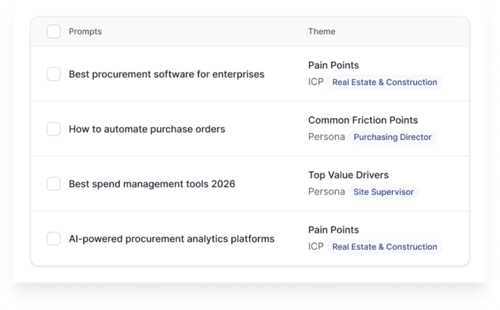
Identify what your audience is actually asking and create content around real demand - not assumptions.
Buyer Intent Detection
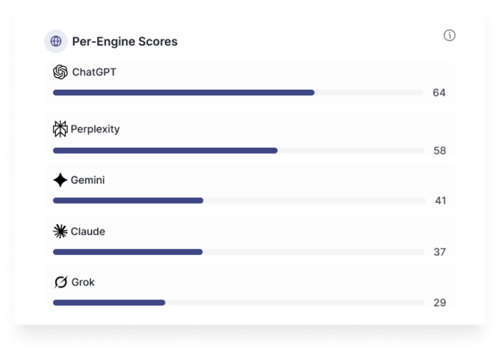
Track what buyers are researching across their journey, including queries in AI search engines.
Real-Time Campaign Planning
Adjust campaigns based on emerging trends instead of outdated insights.
Product Marketing Alignment
Adapt positioning as new pain points and priorities emerge within your ICP.
Competitive Intelligence
Monitor competitor messaging shifts and content strategies before they impact your market share.
AI Search Visibility
Understand which topics AI engines are surfacing and ensure your content is cited where decisions are being influenced.
Types of Trends AI Can Detect
A strong trend detection system identifies multiple layers of market movement:
Manual analysis usually captures only one or two - and too late. AI captures all five, continuously.
Turning Trends into Pipeline
Trend detection only matters if it drives revenue. Here’s how teams operationalize it:
Identify the Trend
Surface signals with full context - source, velocity, and relevance.
Validate Across Data Sources
Cross-check signals across multiple inputs for accuracy.
Map to ICP and Personas
Ensure the trend is relevant to your target audience.
Align with GTM Strategy
Connect insights to campaigns, messaging, or new content opportunities.
Execute Across Channels
Deploy consistently across marketing, sales, and product.
Measure Impact
Track how trend-driven initiatives influence pipeline and conversions.
When executed well, trend detection becomes a revenue engine - not just an insight generator.
KPIs That Actually Matter
To measure effectiveness, focus on business impact - not vanity metrics:
- Time-to-trend detection
- Content performance uplift
- Pipeline influenced by trend-driven campaigns
- AI citation visibility on key topics
- Forecast accuracy
- Conversion rates on trend-aligned content
These metrics reveal whether your system is driving outcomes, not just insights.
Challenges (And How to Fix Them)
AI trend detection is powerful - but not foolproof:
Noise vs. Signal
Not every spike is meaningful. Build validation layers to filter irrelevant data.
Over-Reliance on AI
AI identifies patterns, but human context ensures relevance.
Stale Insights
Static reports become outdated quickly. Use systems that update continuously.
Fragmented Tools
Disconnected systems slow execution. Unified platforms eliminate this gap.
What’s Next for Market Trend Detection
The future of trend detection is moving toward automation and real-time execution:
- AI-driven GTM orchestration
- Autonomous agents acting on trends
- Predictive demand generation
- Buyer-level personalization
- Continuous competitive intelligence
The advantage will compound for teams that build this capability early.
Getting Started
To build an effective trend detection system:
- Identify all available data sources
- Audit gaps in your current insights
- Choose tools that unify signals
- Define a detection-to-action workflow
- Align teams across marketing, sales, and product
- Connect insights directly to execution
- Measure and refine continuously
Conclusion
The teams winning in 2026 aren’t the ones with the most data. They’re the ones that act on it fastest.
AI-powered market trend detection turns scattered signals into real-time strategy - and real-time strategy into pipeline.
Know what your buyers need before they fully articulate it.
Create content that answers those needs before competitors catch up.
That is how modern B2B teams turn market intelligence into measurable revenue.